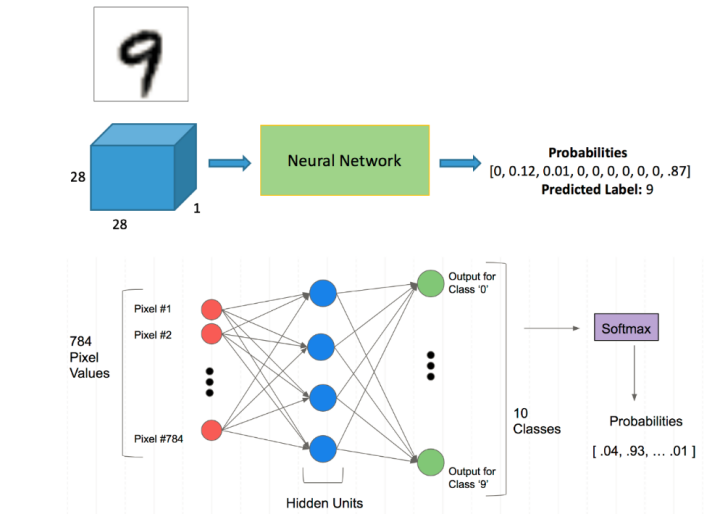
神经网络分类任务
神经网络分类任务
1.Mnist分类任务
- 网络基本构建与训练方法,常用函数解析
- torch.nn.functional模块
- nn.Module模块
2.读取Mnist数据集
会自动进行下载.
from matplotlib import pyplot
import numpy as np
from pathlib import Path
import requests
import pickle
import gzip
import torch

DATA_PATH = Path("data")
PATH = DATA_PATH / "mnist"

PATH.mkdir(parents=True, exist_ok=True)

URL = "http://deeplearning.net/data/mnist/"
FILENAME = "mnist.pkl.gz"

if not (PATH / FILENAME).exists():
        content = requests.get(URL + FILENAME).content
        (PATH / FILENAME).open("wb").write(content)

with gzip.open((PATH / FILENAME).as_posix(), "rb") as f:
        ((x_train, y_train), (x_valid, y_valid), _) = pickle.load(f, encoding="latin-1")


pyplot.imshow(x_train[0].reshape((28, 28)), cmap="gray")
pyplot.show()
print(x_train.shape)
输出结果:
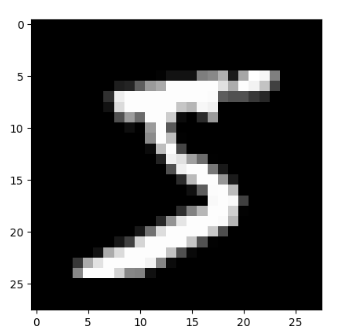
(50000, 784)
注意数据需转换成tensor才能参与后续建模训练。
x_train, y_train, x_valid, y_valid = map(
    torch.tensor, (x_train, y_train, x_valid, y_valid)
)
n, c = x_train.shape
x_train, x_train.shape, y_train.min(), y_train.max()
print(x_train, y_train)
print(x_train.shape)
print(y_train.min(), y_train.max())
输出结果:
tensor([[0., 0., 0.,  ..., 0., 0., 0.],
        [0., 0., 0.,  ..., 0., 0., 0.],
        [0., 0., 0.,  ..., 0., 0., 0.],
        ...,
        [0., 0., 0.,  ..., 0., 0., 0.],
        [0., 0., 0.,  ..., 0., 0., 0.],
        [0., 0., 0.,  ..., 0., 0., 0.]]) tensor([5, 0, 4,  ..., 8, 4, 8])
torch.Size([50000, 784])
tensor(0) tensor(9)
3.torch.nn.functional
torch.nn.functional中有很多功能,后续会常用的。那什么时候使用nn.Module,什么时候使用nn.functional呢?一般情况下,如果模型有可学习的参数,最好用nn.Module,其他情况nn.functional相对更简单一些。
import torch.nn.functional as F

loss_func = F.cross_entropy

def model(xb):
    return xb.mm(weights) + bias

bs = 64
xb = x_train[0:bs]  # a mini-batch from x
yb = y_train[0:bs]
weights = torch.randn([784, 10], dtype = torch.float,  requires_grad = True)
bs = 64
bias = torch.zeros(10, requires_grad=True)

print(loss_func(model(xb), yb))
输出结果:
tensor(11.8637, grad_fn=<NllLossBackward0>)
4.nn.Module
创建一个model来更简化代码。
- 必须继承nn.Module且在其构造函数中需调用nn.Module的构造函数。
- 无需写反向传播函数,nn.Module能够利用autograd自动实现反向传播。
- Module中的可学习参数可以通过named_parameters()或者parameters()返回迭代器。
from torch import nn

class Mnist_NN(nn.Module):
    def __init__(self):
        super().__init__()
        self.hidden1 = nn.Linear(784, 128)
        self.hidden2 = nn.Linear(128, 256)
        self.out  = nn.Linear(256, 10)

    def forward(self, x):
        x = F.relu(self.hidden1(x))
        x = F.relu(self.hidden2(x))
        x = self.out(x)
        return x

net = Mnist_NN()
print(net)

for name, parameter in net.named_parameters():
    print(name, parameter,parameter.size())
输出结果:
Mnist_NN(
  (hidden1): Linear(in_features=784, out_features=128, bias=True)
  (hidden2): Linear(in_features=128, out_features=256, bias=True)
  (out): Linear(in_features=256, out_features=10, bias=True)
)
hidden1.weight Parameter containing:
tensor([[-0.0014,  0.0287,  0.0064,  ..., -0.0067, -0.0291, -0.0009],
        [ 0.0042, -0.0032,  0.0093,  ..., -0.0142,  0.0017,  0.0029],
        [-0.0195, -0.0022,  0.0303,  ..., -0.0305, -0.0260, -0.0281],
        ...,
        [-0.0083, -0.0214,  0.0063,  ..., -0.0058, -0.0289, -0.0099],
        [-0.0327, -0.0171, -0.0186,  ...,  0.0112, -0.0272, -0.0325],
        [ 0.0080, -0.0171,  0.0177,  ...,  0.0196, -0.0302, -0.0209]],
       requires_grad=True) torch.Size([128, 784])
hidden1.bias Parameter containing:
tensor([-2.5082e-02,  3.4613e-02,  2.8929e-02, -9.1332e-03,  3.1317e-02,
         3.2871e-02, -1.8534e-02, -9.2351e-03,  1.3105e-02,  2.8164e-02,
         2.2926e-02,  1.4692e-03, -1.6392e-02, -2.7027e-02, -2.3152e-03,
         2.8548e-02, -3.7485e-03,  3.2557e-03,  3.4798e-02,  1.0538e-04,
         3.5518e-02, -3.1315e-02,  1.9528e-02,  1.3368e-02, -6.2455e-03,
        -1.8614e-03, -2.5163e-02,  1.2450e-02, -1.3421e-02,  1.7647e-02,
         5.7835e-03,  1.9704e-03,  3.4963e-03, -1.2099e-02, -3.6703e-03,
         2.4151e-02,  3.1279e-02, -1.0916e-02, -3.3869e-02, -2.3742e-02,
         1.0694e-02,  8.2119e-03,  1.6860e-02,  1.4846e-03, -1.0588e-02,
        -3.3914e-02,  4.9966e-03, -8.8861e-03, -3.4563e-02, -7.9519e-03,
         1.7180e-02,  1.3122e-02,  2.0451e-02, -3.2566e-02, -2.4481e-02,
        -2.2491e-02, -2.1122e-02, -1.0718e-02,  1.9556e-02,  1.6053e-02,
        -1.7972e-02, -2.5955e-02, -4.3823e-03, -4.8794e-05, -1.0862e-02,
        -3.0757e-02, -3.3692e-02,  3.6571e-03, -2.6568e-02,  1.0305e-02,
         3.3073e-02,  1.6495e-02,  2.8315e-02,  1.7238e-02, -3.2841e-02,
         2.6848e-02,  2.7803e-02, -2.0600e-02,  1.0160e-02, -6.3558e-03,
         2.4960e-02,  3.1521e-02, -4.1828e-03,  2.8110e-02,  1.9540e-02,
        -2.3993e-02,  1.8319e-02,  9.6065e-03,  3.0708e-02, -7.2993e-03,
        -1.2475e-02, -1.2184e-02, -9.3824e-04, -3.4657e-02,  2.4282e-02,
         2.9827e-02, -8.7789e-03,  1.6463e-02,  1.4160e-02,  1.9907e-03,
         1.5485e-02,  5.3685e-03,  2.8379e-02,  1.9492e-02, -3.5959e-03,
        -9.3017e-03, -2.2327e-02,  1.9342e-02, -2.9033e-03, -3.0324e-02,
         2.6879e-02,  2.7407e-02, -2.7163e-02,  2.7238e-03,  3.5014e-02,
        -7.3876e-03, -2.5034e-02, -3.2932e-02,  6.3722e-03, -2.8074e-02,
        -4.0779e-03,  7.2072e-03, -2.8438e-02,  2.3013e-02, -3.4829e-02,
         3.3665e-02,  2.2610e-02,  1.3138e-02], requires_grad=True) torch.Size([128])
hidden2.weight Parameter containing:
tensor([[-0.0830,  0.0739, -0.0288,  ..., -0.0498,  0.0060,  0.0061],
        [ 0.0302, -0.0582, -0.0272,  ...,  0.0728,  0.0231, -0.0174],
        [ 0.0661,  0.0846, -0.0226,  ..., -0.0632, -0.0733, -0.0446],
        ...,
        [ 0.0579, -0.0471, -0.0847,  ..., -0.0218,  0.0637, -0.0073],
        [ 0.0310,  0.0298,  0.0286,  ...,  0.0175,  0.0307,  0.0559],
        [-0.0179,  0.0157,  0.0527,  ..., -0.0071,  0.0506, -0.0054]],
       requires_grad=True) torch.Size([256, 128])
hidden2.bias Parameter containing:
tensor([ 0.0806, -0.0765,  0.0598, -0.0230,  0.0590, -0.0644, -0.0355, -0.0719,
         0.0210, -0.0837, -0.0347,  0.0880,  0.0124,  0.0124,  0.0203, -0.0451,
         0.0576,  0.0428,  0.0332,  0.0354,  0.0413, -0.0799, -0.0806,  0.0363,
        -0.0144, -0.0037, -0.0464, -0.0627,  0.0548, -0.0028,  0.0078, -0.0543,
        -0.0583, -0.0647,  0.0083,  0.0114, -0.0647,  0.0478, -0.0033,  0.0226,
         0.0182, -0.0493, -0.0573, -0.0527, -0.0185, -0.0545, -0.0002,  0.0719,
         0.0424, -0.0394,  0.0082, -0.0605,  0.0601, -0.0151,  0.0159,  0.0331,
        -0.0226,  0.0089,  0.0363,  0.0065, -0.0517, -0.0190, -0.0276, -0.0134,
         0.0396,  0.0570,  0.0192, -0.0545, -0.0022,  0.0238,  0.0594, -0.0548,
        -0.0517,  0.0210, -0.0161,  0.0024, -0.0110, -0.0291,  0.0115,  0.0694,
        -0.0753, -0.0688,  0.0519, -0.0381,  0.0540,  0.0405, -0.0008,  0.0850,
        -0.0426,  0.0709,  0.0650,  0.0077, -0.0202,  0.0807, -0.0841,  0.0872,
         0.0847, -0.0422,  0.0037, -0.0289,  0.0121,  0.0314, -0.0767, -0.0005,
        -0.0126, -0.0426,  0.0745,  0.0028, -0.0839,  0.0139,  0.0513,  0.0355,
        -0.0555, -0.0884, -0.0226, -0.0219, -0.0443,  0.0344,  0.0838,  0.0259,
         0.0120, -0.0802,  0.0706, -0.0049,  0.0051,  0.0032,  0.0494,  0.0873,
         0.0710, -0.0482,  0.0380, -0.0680, -0.0171, -0.0127, -0.0810, -0.0282,
         0.0757, -0.0388, -0.0044,  0.0085,  0.0077,  0.0559, -0.0703,  0.0135,
        -0.0598,  0.0087,  0.0809,  0.0728, -0.0003,  0.0672, -0.0329, -0.0536,
        -0.0033,  0.0070, -0.0495,  0.0489, -0.0576, -0.0821, -0.0312, -0.0871,
         0.0425,  0.0642,  0.0174,  0.0230,  0.0743,  0.0171,  0.0352,  0.0199,
        -0.0519, -0.0268, -0.0076, -0.0795, -0.0550,  0.0436, -0.0339,  0.0761,
        -0.0162,  0.0082, -0.0521,  0.0872, -0.0047, -0.0430, -0.0587, -0.0805,
         0.0428, -0.0729,  0.0704,  0.0828, -0.0570,  0.0737, -0.0332, -0.0201,
        -0.0170,  0.0472, -0.0321, -0.0501, -0.0683, -0.0636,  0.0858, -0.0635,
        -0.0345,  0.0200, -0.0744, -0.0774, -0.0250, -0.0187,  0.0689,  0.0008,
        -0.0499,  0.0658,  0.0456,  0.0169, -0.0563, -0.0696,  0.0236,  0.0230,
        -0.0094,  0.0283, -0.0577,  0.0199, -0.0826,  0.0753,  0.0240, -0.0800,
         0.0406,  0.0087,  0.0798,  0.0811,  0.0254, -0.0443, -0.0620,  0.0103,
        -0.0796,  0.0172,  0.0731, -0.0679,  0.0048,  0.0078,  0.0830, -0.0364,
        -0.0748,  0.0381,  0.0326, -0.0498, -0.0795,  0.0841,  0.0850, -0.0822,
        -0.0646,  0.0378,  0.0831, -0.0073, -0.0105,  0.0134,  0.0840, -0.0501],
       requires_grad=True) torch.Size([256])
out.weight Parameter containing:
tensor([[-0.0064, -0.0347, -0.0198,  ..., -0.0109,  0.0033, -0.0012],
        [-0.0465,  0.0574,  0.0524,  ..., -0.0217,  0.0580,  0.0272],
        [ 0.0238, -0.0463, -0.0057,  ..., -0.0048, -0.0261,  0.0349],
        ...,
        [ 0.0083, -0.0019, -0.0264,  ...,  0.0210,  0.0292, -0.0611],
        [ 0.0356,  0.0418,  0.0176,  ..., -0.0086,  0.0081, -0.0302],
        [ 0.0048,  0.0262,  0.0445,  ...,  0.0353, -0.0432,  0.0412]],
       requires_grad=True) torch.Size([10, 256])
out.bias Parameter containing:
tensor([ 0.0431,  0.0003, -0.0158, -0.0304,  0.0264, -0.0493,  0.0144, -0.0339,
         0.0213,  0.0455], requires_grad=True) torch.Size([10])
5.使用TensorDataset和DataLoader
使用TensorDataset和DataLoader来简化。
from torch.utils.data import TensorDataset
from torch.utils.data import DataLoader
from torch import optim

#############使用TensorDataset和DataLoader来简化##################
def get_data(train_ds, valid_ds, bs):
    return (
        DataLoader(train_ds, batch_size=bs, shuffle=True),
        DataLoader(valid_ds, batch_size=bs * 2),
    )

def get_model():
    model = Mnist_NN()
    return model, optim.SGD(model.parameters(), lr=0.001)

def loss_batch(model, loss_func, xb, yb, opt=None):
    loss = loss_func(model(xb), yb)

    if opt is not None:
        loss.backward()
        opt.step()
        opt.zero_grad()

    return loss.item(), len(xb)

def fit(steps, model, loss_func, opt, train_dl, valid_dl):
    for step in range(steps):
        model.train()
        for xb, yb in train_dl:
            loss_batch(model, loss_func, xb, yb, opt)

        model.eval()
        with torch.no_grad():
            losses, nums = zip(
                *[loss_batch(model, loss_func, xb, yb) for xb, yb in valid_dl]
            )
        val_loss = np.sum(np.multiply(losses, nums)) / np.sum(nums)
        print('当前step:'+str(step), '验证集损失:'+str(val_loss))


train_ds = TensorDataset(x_train, y_train)
train_dl = DataLoader(train_ds, batch_size=bs, shuffle=True)

valid_ds = TensorDataset(x_valid, y_valid)
valid_dl = DataLoader(valid_ds, batch_size=bs * 2)

#三行代码搞定
train_dl, valid_dl = get_data(train_ds, valid_ds, bs)
model, opt = get_model()
fit(25, model, loss_func, opt, train_dl, valid_dl)
一般在训练模型时加上model.train(),这样会正常使用Batch Normalization和 Dropout。 测试的时候一般选择model.eval(),这样就不会使用Batch Normalization和 Dropout。
输出结果:
当前step:0 验证集损失:2.2793041885375978
当前step:1 验证集损失:2.245996584701538
当前step:2 验证集损失:2.192959008026123
当前step:3 验证集损失:2.106726198196411
当前step:4 验证集损失:1.9678182140350342
当前step:5 验证集损失:1.7617682785034179
当前step:6 验证集损失:1.5094052183151245
当前step:7 验证集损失:1.2630394382476806
当前step:8 验证集损失:1.0593502239227295
当前step:9 验证集损失:0.9065713457107544
当前step:10 验证集损失:0.7939958375930786
当前step:11 验证集损失:0.7104090020179749
当前step:12 验证集损失:0.6462713677406311
当前step:13 验证集损失:0.5958507433891297
当前step:14 验证集损失:0.5559158635139465
当前step:15 验证集损失:0.5234671715736389
当前step:16 验证集损失:0.49662490549087523
当前step:17 验证集损失:0.47411190090179445
当前step:18 验证集损失:0.45545100722312926
当前step:19 验证集损失:0.43968091354370115
当前step:20 验证集损失:0.4263882553100586
当前step:21 验证集损失:0.4145590144634247
当前step:22 验证集损失:0.4038331202030182
当前step:23 验证集损失:0.3949033221483231
当前step:24 验证集损失:0.3871174467325211
模型预测与评估。
# 在测试集上评估模型
model.eval()
correct = 0
total = 0
with torch.no_grad():
    for images, labels in valid_dl:
        outputs = model(images)
        _, predicted = torch.max(outputs.data, 1)
        total += labels.size(0)
        correct += (predicted == labels).sum().item()

accuracy = correct / total
print(f'Test Accuracy: {accuracy * 100:.2f}%')
输出结果:
Test Accuracy: 89.84%
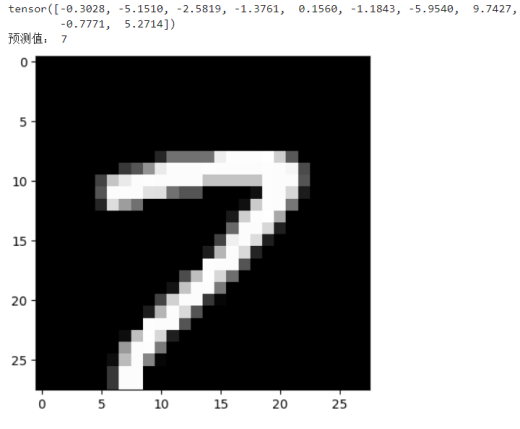
预测单个图片:
valid_img = x_train[123] #预测第123张图片
pyplot.imshow(valid_img.reshape((28, 28)), cmap="gray")
outputs = model(valid_img)
print(outputs.data)
predict = torch.max(outputs.data,0)
print("预测值:",predict.indices.item())